

The GMAT score remains an important metric for candidates aiming for top-ranked MBA programs in the U.S. Applicants often compare their scores with the averages or medians of students enrolled at their target business schools to understand where they stand.
However, no single GMAT score guarantees admission to an M7 or any other top MBA program. Class averages and medians should be viewed as useful benchmarks rather than admission cutoffs.
This article compares GMAT scores across M7 and other top U.S. business schools. Some schools report averages, while others report medians, and the relevant metric is specified for each school. Where a score on the current GMAT scale has been estimated using official GMAC concordance data, it has been clearly marked as an estimate.
Download GMAT Scores Required for Top U.S MBAs FREE PDF
Average GMAT Scores for Top MBA Programs
There is no single average GMAT score across all top U.S. MBA programs. Among the schools included in this comparison, the current GMAT averages and medians range from 655 to 690.
These figures need to be interpreted carefully. Some business schools report the average GMAT score of their class, while others report the median. Additionally, where a directly reported figure on the current GMAT scale is not available for this comparison, an estimate based on official GMAC concordance data has been used and clearly identified.
The tables below include scores on both the current GMAT scale and the previous GMAT scale. These should not be compared directly based on their numerical values because the two versions of the exam use different scoring scales. The previous GMAT figures are included primarily to provide context alongside the current-scale figures.
To understand your current GMAT level and see how it compares against the top schools, not just from the USA but globally, taking a Free GMAT Mock Test can help.
Average GMAT Scores for M7 Business Schools
The M7 business schools are among the most selective MBA programs in the U.S., and their classes typically have strong GMAT averages or medians. The following table compares the current GMAT figures used in this analysis with figures on the previous GMAT scale.
Business School | Current GMAT | Previous GMAT | Metric |
Harvard Business School | 685 | 730 | Median |
Stanford GSB | 690* | 738 | Average |
Wharton | 676 | 735 | Average |
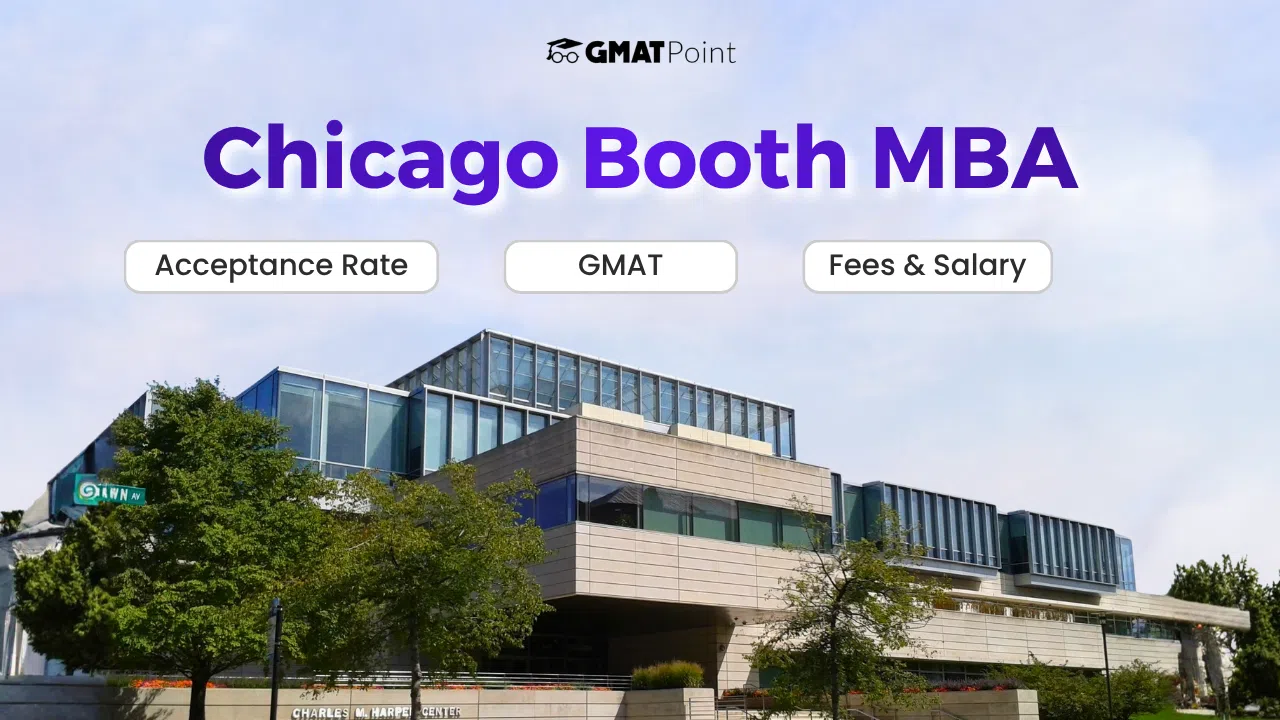
Chicago Booth | 670 | 729 | Average |
Northwestern Kellogg | 687 | 733 | Average |
MIT Sloan | 675 | 720 | Average |
Columbia Business School | 680* | 732 | Average |
* Estimated current GMAT score using official GMAC concordance data.
The current GMAT averages and medians for the M7 schools included here fall within a relatively narrow range of 670 to 690. Harvard Business School reports a median of 685 rather than an average. The figures of 690 for Stanford GSB and 680 for Columbia Business School are estimates based on official GMAC concordance data.
These figures provide useful benchmarks for applicants, but they should not be interpreted as minimum scores required for admission. A school's class average or median describes the GMAT performance of its class; it does not function as an admissions cutoff.
One of the best ways to improve your GMAT score is to use study materials curated by experts and top scorers. Using GMAT Courses by 785 Scorer can help students improve their GMAT scores.
GMAT Scores for Top Non-M7 Business Schools
Applicants targeting competitive U.S. MBA programs should not restrict their research to M7 benchmarks. Several other highly ranked business schools also have strong GMAT averages and medians and can provide useful reference points when setting a target score.
Business School | Current GMAT | Previous GMAT | Metric |
Cornell Johnson | 660* | 710 | Median |
Duke Fuqua | 655* | 722 | Average |
Yale SOM | 675 | 740 | Median |
UVA Darden | 671 | 725 | Average |
Dartmouth Tuck | 671 | 727 | Average |
NYU Stern | 682 | 737 | Average |
UCLA Anderson | 660 | 718 | Average |
Carnegie Mellon Tepper | 659 | 707 | Average |
*Estimated current GMAT score using official GMAC concordance data.
For the non-M7 business schools included in this comparison, the current GMAT averages and medians range from 655 to 682. NYU Stern has an average of 682, while Yale SOM reports a median of 675. UVA Darden and Dartmouth Tuck both have averages of 671. UCLA Anderson has an average of 660, while Carnegie Mellon Tepper has an average of 659. The figures of 660 for Cornell Johnson and 655 for Duke Fuqua are estimates based on official GMAC concordance data.
A lower class average or median should not automatically be interpreted as meaning that a business school is easier to get into. GMAT performance is only one component of an MBA application, and admissions decisions take the applicant's broader profile into account.
To understand more about how B-School Admissions work and the factors that are considered apart from GMAT scores, GMAT Expert Mentorship can act as a very useful resource for students that want personalised, holistic guidance.
What GMAT Score Do You Need for a Top MBA?
There is no fixed GMAT score required to gain admission to a top U.S. MBA program. Among the business schools discussed above, the current GMAT averages and medians generally fall in the mid-600s to high-600s.
The latest class average or median at your target business school can be used as a benchmark when setting your first GMAT target. However, it should not be treated as an admissions cutoff. A score below a school's average or median does not automatically mean rejection, just as a score above it does not guarantee admission.
MBA admissions are holistic. Along with test scores, business schools may consider factors such as academic background, professional experience, career progression, leadership experience, essays, recommendations, and the overall strength of the application.
Your target GMAT score should therefore depend on the MBA programs you plan to apply to and the strength of your overall profile rather than on a single score that is considered universally "good."
Once you know the core range you’re targeting, the next step is to understand your current level and how it compares against your target scores. The Free GMAT Mock Test by 785 Scorer provides students with a benchmark score and also a comparison against the scores required for their target schools!
Is a 675 GMAT Score Good for Top Business Schools?
A 675 GMAT score can be considered competitive relative to the averages and medians of several highly ranked U.S. MBA programs in this dataset. It is equal to or above the reported class figures for several schools, although it remains below the Harvard Business School median of 685.
Business School | Reported GMAT Score | Metric |
Harvard Business School | 685 | Median |
Wharton | 676 | Average |
Chicago Booth | 670 | Average |
MIT Sloan | 675 | Average |
Yale SOM | 675 | Median |
UVA Darden | 671 | Average |
Dartmouth Tuck | 671 | Average |
UCLA Anderson | 660 | Average |
Carnegie Mellon Tepper | 659 | Average |
For example, 675 matches the average at MIT Sloan and the median at Yale SOM. It is also above the averages reported for Chicago Booth, UVA Darden, Dartmouth Tuck, UCLA Anderson, and Carnegie Mellon Tepper in this comparison.
However, this does not mean that 675 is a cutoff or a guaranteed admission score for any of these programs. It also does not mean that 675 is automatically sufficient for an M7 admission. An applicant's target score should depend on the schools being targeted and the strength of the rest of the application.
Whether you should retake the GMAT after scoring 675 will therefore depend on your target programs, current profile, and whether a higher score could meaningfully strengthen your application.
To achieve GMAT scores that are not only average for the classes at some of the top U.S business schools but actually higher, students should utilise study materials and practice tests curated by experts and top scorers. Using the GMAT Course by 785 Scorer can help students improve their score.
How to Set Your GMAT Target Score for MBA Admissions
Your GMAT target score should be based on your target MBA programs and your current performance rather than an arbitrary score. You can use the following process:
- Make a list of your target MBA programs.
- Check the latest average or median GMAT score for each business school and use these figures as benchmarks rather than cutoffs.
- Take a full-length GMAT mock test to establish your current score level.
- Compare your mock score with the averages or medians at your target schools to understand the gap you need to close.
- Identify your weaker section, whether it is Quantitative Reasoning, Verbal Reasoning, or Data Insights.
- Focus your preparation on the areas that are limiting your overall score rather than simply aiming for an arbitrary number such as 675 or 705.
- Continue taking mocks during your preparation and reassess your target based on your progress.
This approach gives you a target based on your actual performance and MBA goals rather than relying on a universal GMAT score.
To get personalised guidance on shortlisting b-schools, preparing your applications, building structured study plans for improving your GMAT scores according to your own timelines, GMAT Expert Mentorship can be a great tool for candidates.
Conclusion
The GMAT averages and medians of top U.S. MBA programs indicate the level of test performance commonly seen among students in their incoming classes. Across the schools included in this comparison, current GMAT averages and medians generally fall in the mid-to-high 600s. For the M7 schools specifically, the reported or estimated figures in this dataset range from 670 to 690.
However, these numbers should be used as benchmarks rather than admission requirements. MBA admissions depend on the applicant's overall profile, and scoring above a school's average or median does not guarantee admission.
A practical starting point is to take a GMAT mock, establish your current score, compare it with the averages or medians of your target business schools, and then set a realistic GMAT target based on the gap you need to close.