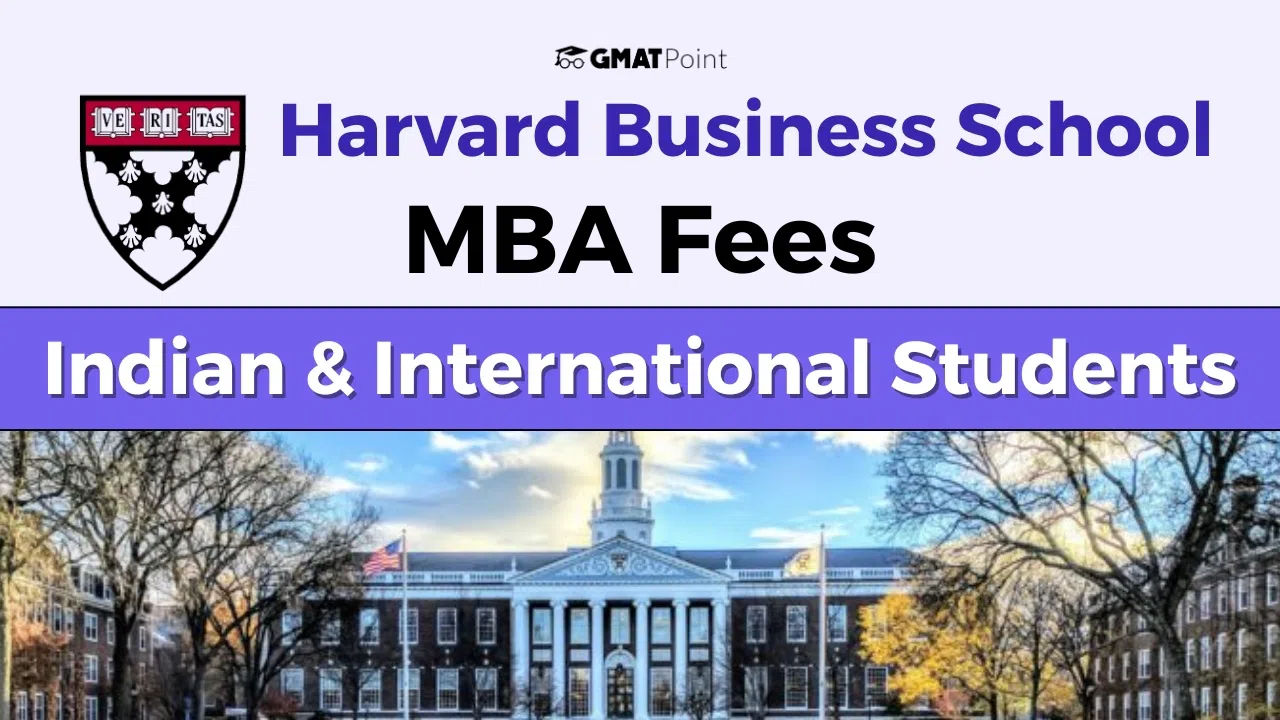

The 2026 admissions cycle for Harvard Business School (HBS) is for the MBA Class of 2029, which will begin the programme in Fall 2027. HBS received 9,409 applications for the latest MBA Class of 2027 and enrolled 943 students, with an official acceptance rate of approximately 12%.
For applicants planning to apply, understanding the Harvard Business School acceptance rate, MBA requirements, GMAT and GRE score expectations, tuition costs, scholarships, application deadlines and career outcomes is important. This guide covers the latest HBS admissions data, including both current GMAT and GMAT 10th Edition (Classic GMAT) scores, to help applicants understand the competitiveness of the programme.
One of the first steps to take to get into Harvard Business School is to have a strong GMAT score. To see where you currently stand relative to the scores required for admission into HBS, check out: Free GMAT Mock Test By 100 Percentiler
What GMAT or GRE Score Do You Need for Harvard Business School?
Harvard Business School does not set a minimum GMAT or GRE score requirement for MBA applicants. The school does not have a preference between the two exams and evaluates candidates based on their complete application profile.
For the MBA Class of 2027, the median score was 685 on the current GMAT Exam and 730 on the GMAT 10th Edition (Classic GMAT). These figures represent class-profile statistics and should not be interpreted as admission cut-offs.
A score below the median does not automatically eliminate an applicant, and a score above the median does not guarantee admission. HBS evaluates candidates based on academic background, professional experience, leadership potential, essays, recommendations and overall fit with the programme.
Harvard Business School GMAT and GRE Scores — Class of 2027
Test | HBS Median | Middle 80% Range |
Current GMAT Exam | 685 | 645-735 |
Current GMAT Verbal Reasoning | 86 | 82-90 |
Current GMAT Quantitative Reasoning | 84 | 79-89 |
GMAT 10th Edition (Classic GMAT) | 730 | 690-770 |
Classic GMAT Verbal | 42 | 38-47 |
Classic GMAT Quantitative | 49 | 45-50 |
GRE Verbal | 164 | 158-168 |
GRE Quantitative | 164 | 159-169 |
The best way to improve your GMAT Score is to use study materials prepared by experts and top-scorers. Check out: GMAT Courses By 100 Percentiler
GMAT Concordance Context
The current GMAT Exam and GMAT 10th Edition use different scoring scales, so the scores cannot be compared by simply looking at the difference between the numbers.
The GMAT Concordance Table compares the two scoring systems through percentile equivalence. According to the GMAC concordance data, a 685 score on the current GMAT corresponds approximately to the 730-740 range on the Classic GMAT scale at the same 96.2 percentile level.
Current GMAT Exam | Classic GMAT Equivalent | Percentile |
685 | 730-740 | 96.2% |
HBS also reports that among the Class of 2027:
- 44% submitted GRE scores
- 34% submitted current GMAT scores
- 28% submitted GMAT 10th Edition scores
These percentages overlap because some students submitted more than one test score.
Harvard Business School MBA Admission Requirements
Harvard Business School does not have one numerical requirement that guarantees admission. Instead, HBS evaluates applicants holistically across academic background, professional achievements, test scores, written application materials, recommendations and leadership potential.
HBS looks for candidates who demonstrate:
- Strong intellectual ability
- Leadership potential
- Business-minded thinking
- The ability to contribute to the HBS community
The MBA application includes academic transcripts, GMAT/GRE scores, English-language testing where applicable, essays, recommendations, resume, application fee or fee waiver and acceptance of admissions policies.
HBS strongly recommends that applicants have at least two years of full-time professional work experience before enrolment. The MBA Class of 2027 has an average of 4.9 years of work experience.
Harvard Business School MBA Requirements
Requirement | HBS Requirement |
Academic qualification | Bachelor's degree or equivalent |
International degree eligibility | International three-year bachelor's degrees may qualify as equivalent |
Work experience | 2 Years (Recommended by HBS) |
Average work experience, Class of 2027 | 4.9 years |
GMAT/GRE | One is required |
Minimum GMAT/GRE score | No published minimum |
GMAT/GRE test waiver | Not available |
Recommendations | 2 |
Essays | Required |
Resume | Required |
Transcripts | Required |
Application fee | $250 |
Interview | By invitation only |
Interview duration | Approximately 30 minutes |
Post-interview reflection | Required within 24 hours |
The HBS MBA interview is conducted by an MBA Admissions Board member who has reviewed the application. Candidates invited for an interview must submit a post-interview reflection within 24 hours.
International Applicant Requirements
International applicants follow the same overall admissions process as other candidates.
Applicants whose undergraduate institution did not use English as its sole language of instruction must submit an English-language test score such as TOEFL, IELTS, PTE or Duolingo English Test.
HBS does not specify a formal minimum English-language test score but discourages applications below:
- TOEFL: 109 on the traditional scale or 5 on the newer scale
- IELTS: 7.5
- PTE: 75
- Duolingo English Test: 145
English-language proficiency is only one part of the evaluation process. HBS also considers academic performance, professional experience, leadership potential, essays and recommendations.
Harvard Business School Acceptance Rate and Class Profile
Harvard Business School is one of the most selective MBA programmes in the world. For the MBA Class of 2027, HBS received 9,409 applications and enrolled 943 students, with an official acceptance rate of approximately 12%.
However, the acceptance rate alone does not fully represent the competitiveness of the programme. Applicants should also compare themselves with the academic background, professional experience and diversity profile of the enrolled class.
The latest HBS By the Numbers data provides the following snapshot of the Class of 2027:
Metric | HBS Class of 2027 |
Applications received | 9,409 |
Acceptance rate | 12% |
Yield (Percentage of offers accepted) | 85% |
Students enrolled | 943 |
Women | 44% |
International students | 37% |
Countries represented | 62 |
Universities represented | 283 |
First-generation college students | 10% |
Average GPA* | 3.76 |
Average work experience | 4.9 years |
Middle 80% work-experience range | 3-7 years |
*Average GPA is based on students from US institutions that report GPA on a 4.0 scale.
The Class of 2027 also includes students from diverse academic backgrounds. An undergraduate business degree is not mandatory for admission, as HBS admits students from engineering, economics, sciences, humanities and other disciplines.
Undergraduate Academic Backgrounds — Class of 2027
- Engineering: 24%
- Business/Commerce: 22%
- Economics: 19%
- Math/Physical Sciences: 19%
- Social Sciences: 11%
- Arts/Humanities: 5%
A strong academic profile is only one part of the application. HBS also evaluates professional achievements, leadership experience, personal qualities and the overall contribution an applicant can make to the MBA community.
Harvard Business School MBA Fees, Scholarships and Total Cost
The cost of pursuing an MBA at Harvard Business School includes tuition, accommodation, health insurance, food, transportation and other living expenses.
For the 2026-27 academic year, the MBA tuition fee is $84,760. However, tuition is only one part of the overall cost. For a single student, HBS estimates a total nine-month cost of attendance of $130,318, including living expenses.
HBS also lists a computer allowance of approximately $1,500, which is separate and not included in the estimated cost of attendance.
Harvard MBA Cost of Attendance 2026-27
Expense | Single-Student Cost |
Tuition | $84,760 |
HUHS Student Health Fee | $1,944 |
Student Health Insurance Plan | $4,954 |
Housing | $18,600 |
Food | $9,400 |
Transportation | $1,860 |
Other living expenses | $8,800 |
Total estimated cost of attendance | $130,318 |
Computer allowance* | ~$1,500 |
*Not included in the $130,318 total.
It is important to note that HBS publishes the cost of attendance annually. Therefore, applicants should not simply multiply the 2026-27 annual estimate by two and consider it the official total MBA cost.
Harvard Business School Scholarships
HBS financial aid is primarily need-based rather than merit-based. A high GMAT or GRE score does not automatically qualify an applicant for a scholarship.
Approximately half of HBS MBA students receive need-based scholarships, and financial aid is available to both domestic and international students.
Harvard MBA Scholarships
Scholarship Metric | Current HBS Figure |
Students receiving need-based scholarships | ~50% |
Students receiving full-tuition scholarships | 10% |
Average need-based scholarship over two years | ~$100,000 |
HBS scholarship range | $2,000-$87,000 per year |
HBS considers several factors while determining financial aid eligibility, including:
- Gross income over the previous three years
- Assets
- Socioeconomic background
- Undergraduate debt
- Household financial circumstances for applicants with spouses or children
Harvard Business School Application Deadlines 2026-27
The 2026-27 Harvard Business School admissions cycle is for the MBA Class of 2029, which will begin the programme in Fall 2027.
HBS opened the application process in June 2026 and offers two regular MBA application rounds.
Harvard Business School MBA Deadlines
Round | Application Deadline | Decision Date |
Round 1 | September 9, 2026, 12:00 PM ET | December 10, 2026 |
Round 2 | January 5, 2027, 12:00 PM ET | March 25, 2027 |
Applicants should choose the application round based on when they can present the strongest version of their profile. Applying in Round 1 is not an automatic guarantee of admission advantage, and candidates are admitted through both rounds.
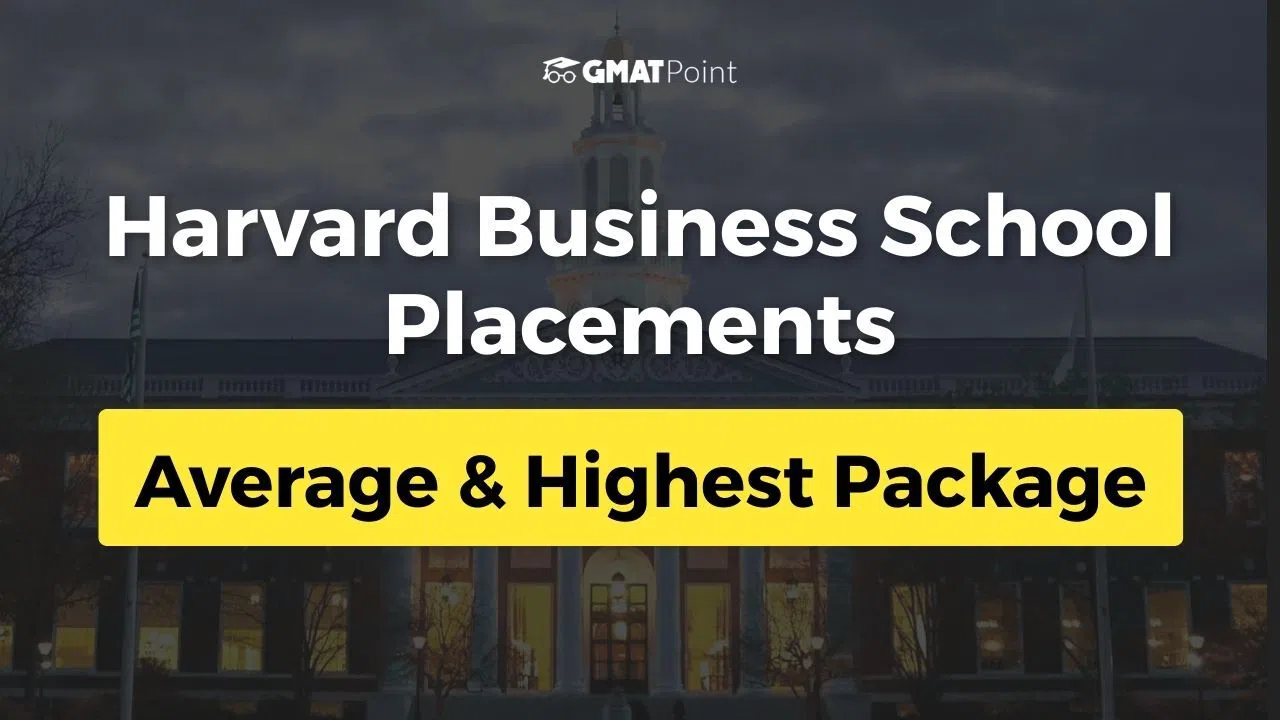
Harvard MBA Salary, Median Total Compensation and Career Outcomes
For applicants evaluating the return on investment of an MBA, employment outcomes and compensation are important factors to consider.
The latest available employment data for Harvard Business School is for the MBA Class of 2025.
Among graduates seeking employment:
- 90% received a job offer within three months of graduation
- 84% accepted a job offer within three months of graduation
- The offer rate increased to approximately 94% by November 2025
The median base salary for HBS MBA graduates was $184,500, while the median signing bonus was $30,000. When base salary, signing bonus and reported variable compensation are combined, the median total compensation was approximately $232,800.
These figures represent median compensation, not average pay or after-tax income. Actual compensation varies depending on industry, role, location and individual circumstances.
Harvard MBA Salary and Total Compensation — Class of 2025
Compensation Metric | Class of 2025 |
Median base salary | $184,500 |
Median signing bonus | $30,000 |
Graduates receiving signing bonus | 58% |
Median performance/variable bonus | ~$46,125 |
Graduates reporting variable bonus | 67% |
Median total compensation | $232,800 |
Harvard MBA Employment by Industry
Financial services remained the largest employment destination, followed by technology and consulting.
Industry | Share of Job-Accepting Graduates |
Financial Services | 34% |
Technology | 22% |
Consulting | 21% |
Health Care | 6% |
Manufacturing | 5% |
Nonprofit / Government | 4% |
Entertainment / Media | 3% |
Services | 3% |
Consumer Products | 2% |
Retail / Trading | <1% |
Selected Harvard MBA Salaries by Industry
Career Path | Median Base Salary |
Venture Capital | $200,000 |
Other Financial Services | $192,000 |
Consulting | $190,000 |
Private Equity | $188,000 |
Investment Management / Hedge Funds | $183,000 |
Technology | $178,000 |
Investment Banking | $175,000 |
Manufacturing | $162,000 |
Health Care | $160,000 |
Consumer Products | $146,000 |
Non-Profit / Government | $130,000 |
The geographic distribution of accepted jobs shows that most graduates continue working in the United States.
Employment Location — Class of 2025
- United States: 92%
- Asia: 3%
- Europe: 2%
- Middle East/North Africa: 1%
- Canada: <1%
- Latin America: <1%
These percentages represent the location of accepted employment, not all job offers received.
Conclusion
The Harvard Business School MBA remains one of the most competitive MBA programmes globally. Applicants should evaluate their profile holistically rather than focusing only on one GMAT or GRE score. The 685 current GMAT median and 730 Classic GMAT median are class statistics, not admission cut-offs.
While the programme requires a significant financial investment, HBS provides substantial need-based financial aid. Strong career outcomes across finance, technology and consulting continue to make the Harvard Business School MBA a highly sought-after programme for ambitious professionals.