


Most Beautiful MBA Campuses in the USA
From waterfront business schools and historic university settings to modern architectural landmarks, some MBA campuses in the U.S. offer an experience that extends well beyond the classroom. The eight business schools below stand out for their scenery, architecture, surroundings, or unusual campus features.
Business School | University | Location | What Makes the Campus Special |
Stanford Graduate School of Business | Stanford University | Stanford, California | Phil Knight's $105 million gift helped kick-start the development of its Knight Management Center! |
Harvard Business School | Harvard University | Boston, Massachusetts | Imagine doing your MBA in a building that embeds a 4th-century Roman mosaic! |
Kellogg School of Management | Northwestern University | Evanston, Illinois | Right beside Lake Michigan — and on some flight approaches into Chicago O'Hare, the Global Hub can even be visible from the air! |
Cornell Johnson | Cornell University | Ithaca, New York | 150+ waterfalls within 10 miles, with a six-waterfall gorge trail just minutes from campus! |
Tuck School of Business | Dartmouth College | Hanover, New Hampshire | Several Tuck buildings are connected by underground tunnels, making New Hampshire winters easier to navigate! |
Darden School of Business | University of Virginia | Charlottesville, Virginia | About a mile from UVA's UNESCO-listed Academical Village, one of America's most historic university settings! |
Yale School of Management | Yale University | New Haven, Connecticut | Designed by Norman Foster — the same architect behind Apple Park! |
Duke Fuqua School of Business | Duke University | Durham, North Carolina | Campus views of Duke Forest — a 7,000-acre living laboratory! |
The campus is one of the reasons that these schools are attractive to thousands of applicants worldwide. This means that a strong application is extremely important, making a strong GMAT score one of the essential criteria to get into these schools.
To know your current score levels and how they compare to the required scores for these schools, check out: GMATPoint Mocks.
And to improve your chances of getting into one of these campuses, check out: GMATPoint Courses.
Stanford GSB
Stanford Graduate School of Business combines modern architecture with the open, landscaped surroundings of Stanford University's California campus. Its centrepiece, the Knight Management Center, includes academic buildings, courtyards, walkways and outdoor spaces designed to create a connected campus environment.
The project received an important early boost from Nike co-founder and Stanford alumnus Phil Knight, whose $105 million gift helped support the development of the new GSB campus. The result is one of the most recognisable modern business school settings in the U.S.

Harvard Business School
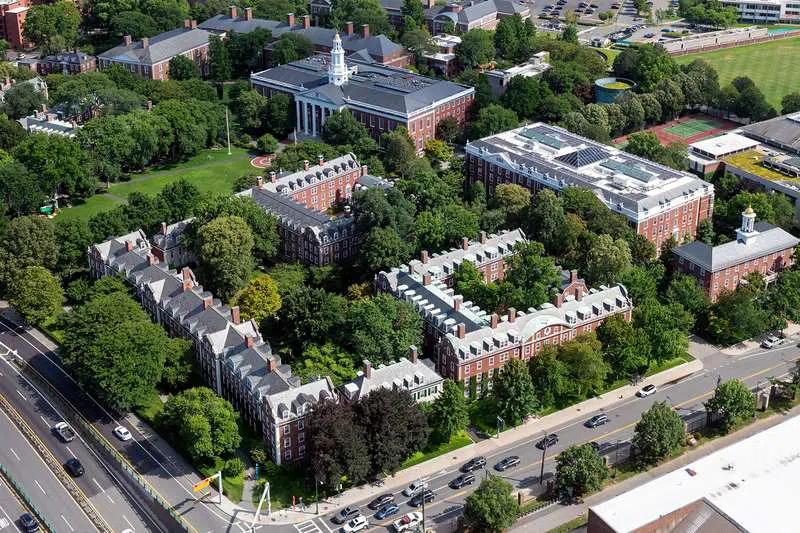
Harvard Business School combines historic red-brick architecture with some unusually distinctive details. One of the most surprising can be found inside Morgan Hall, where a 4th-century Roman mosaic depicting the sea goddess Tethys is embedded in the floor near the entrance.
It creates an unexpected connection to ancient Roman history in the middle of one of the world's best-known business schools and gives the HBS campus a feature few MBA schools can match.
Kellogg
Kellogg School of Management occupies a striking waterfront location on Northwestern University's Evanston campus. Its Global Hub sits directly beside Lake Michigan, giving students expansive water views while keeping them within easy reach of Chicago.
Its lakefront setting also makes the building distinctive from above. Depending on the flight path and approach into Chicago O'Hare Airport, the Kellogg Global Hub and Northwestern lakefront can sometimes be visible from the air.

Cornell Johnson
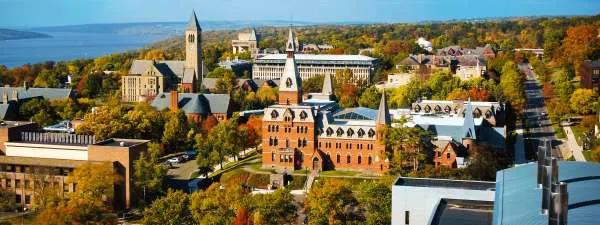
Cornell Johnson's Ithaca setting brings dramatic natural scenery into the MBA experience. The Ithaca area is known for more than 150 waterfalls within 10 miles, along with wooded trails, steep gorges and seasonal landscapes.
Cascadilla Gorge, located close to Cornell's campus, features a trail passing six waterfalls and connects the university area with downtown Ithaca. For students who enjoy hiking and nature, Cornell offers one of the most distinctive settings among top U.S. business schools.
Dartmouth Tuck
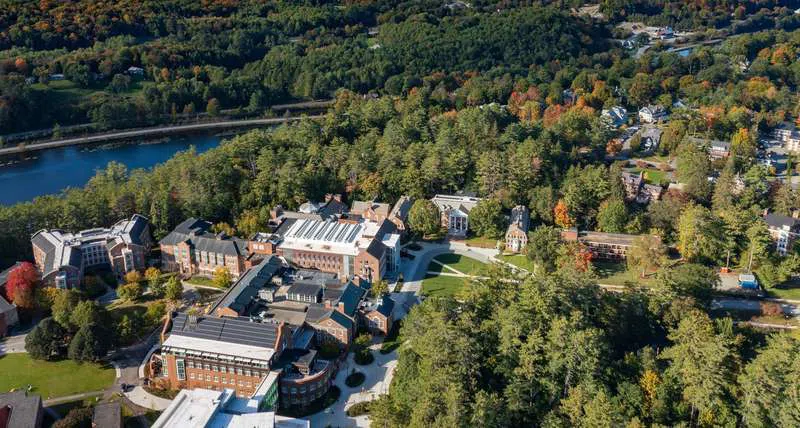
Tuck School of Business offers the classic New England campus experience in Hanover, New Hampshire. Traditional buildings, greenery and snowy winters give the school a very different feel from major urban MBA campuses.
Tuck also has an unusual practical feature: several of its academic and student buildings are connected through underground tunnels. Students can therefore move between parts of the Tuck campus without always having to step outside during the coldest months.
UVA Darden
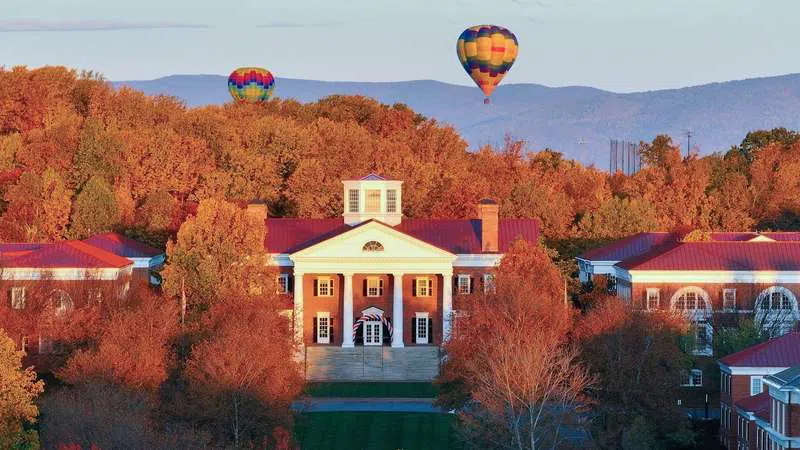
Darden School of Business sits on the University of Virginia's North Grounds in Charlottesville, surrounded by architecture designed to complement the broader Jeffersonian character of UVA.
Darden itself is not within the UNESCO World Heritage property, but it is only about a mile from UVA's historic Academical Village. The UNESCO-listed area includes Thomas Jefferson's Rotunda, Lawn and surrounding pavilions, giving Darden students easy access to one of America's most historically significant university settings.
Yale SOM
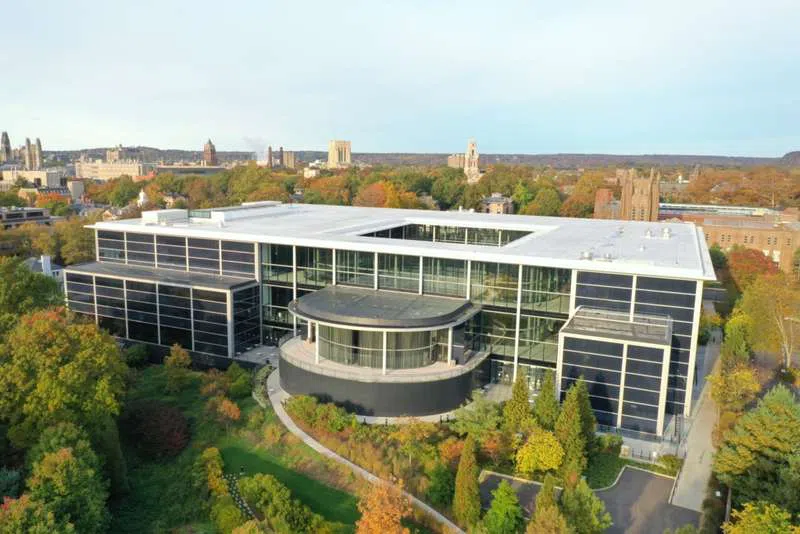
Yale School of Management's Edward P. Evans Hall stands apart from much of Yale University's traditional architecture. The contemporary glass building was designed by renowned architect Norman Foster and Foster + Partners.
Foster's portfolio also includes Apple Park, Apple's headquarters in Cupertino. That connection gives Evans Hall an architectural pedigree that makes Yale SOM one of the most visually distinctive modern business schools on this list.
Duke Fuqua
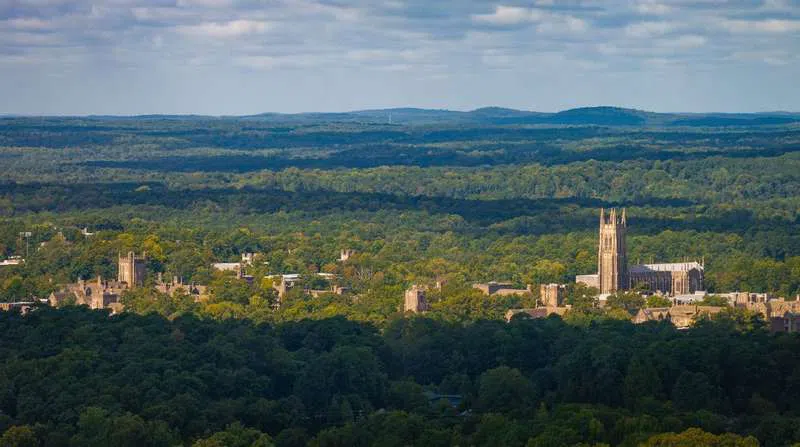
Duke University's Fuqua School of Business combines modern academic facilities with the greenery surrounding Duke's West Campus.
Fuqua's buildings offer views towards Duke Forest, a research and teaching forest spanning more than 7,000 acres. The natural surroundings give the school a calmer setting while keeping students connected to the wider Duke University campus.
Which MBA Campus Has the Best Natural Setting?
For sheer natural scenery, Cornell Johnson is particularly difficult to beat, but several schools on this list offer very different kinds of outdoor settings.
Cornell Johnson
Cornell stands out for its waterfalls and gorges. More than 150 waterfalls can be found within 10 miles of Ithaca, while the nearby Cascadilla Gorge trail passes six waterfalls between Cornell and downtown.
Kellogg
Kellogg's Evanston campus sits directly beside Lake Michigan. Its waterfront location gives students expansive lake views while keeping them close to Chicago.
Dartmouth Tuck
Tuck is surrounded by the natural landscape of Hanover, New Hampshire. Wooded surroundings, changing seasons and snowy winters give it a traditional New England campus feel.
Duke Fuqua
Duke Fuqua combines a modern business school environment with views towards Duke Forest, giving students a greener setting than many business schools in major cities.
As unique as these campuses are, they are also extremely selective about which candidates they enrol. Often times, it’s about how you present yourself through your essays that makes the difference, and an experienced mentor can help improve your presentation.
Check out: GMATPoint Mentorship
Which MBA Campus Has the Most Unique Architecture?
Harvard, Yale and Darden offer three very different architectural experiences. Harvard brings ancient history into one of its buildings, Yale SOM showcases modern Norman Foster design, while Darden sits close to the historic Jefferson-designed core of UVA.
Harvard Business School
Harvard Business School has one of the most unusual individual features on this list: a 4th-century Roman mosaic embedded inside Morgan Hall. The ancient artwork creates a striking contrast with the surrounding American business school campus.
Yale School of Management
Yale SOM's Evans Hall was designed by Norman Foster, whose work also includes Apple Park. Its curved glass exterior and contemporary design stand in sharp contrast to much of Yale's traditional architecture.
UVA Darden
Darden's architecture draws inspiration from the Jeffersonian character associated with the University of Virginia. It is also located about a mile from UVA's UNESCO-listed Academical Village, home to the Rotunda, Lawn and historic pavilions designed by Thomas Jefferson.
How Do the Best MBA Campuses Compare?
The schools on this list offer very different campus experiences, ranging from waterfront and forest settings to historic architecture and contemporary design.
MBA School | Campus Highlight | Setting | Architecture |
Stanford GSB | Knight Management Centre | Suburban | Modern |
Harvard Business School | 4th-century Roman mosaic | Urban | Historic |
Kellogg | Lake Michigan | Lakeside | Modern |
Cornell Johnson | Waterfalls and gorges | Natural | Historic |
Tuck | New Hampshire landscape | Natural | Traditional |
Darden | Near UVA's UNESCO-listed Academical Village | Historic | Classical-inspired |
Yale SOM | Norman Foster-designed Evans Hall | Urban | Contemporary |
Duke Fuqua | Duke Forest | Natural | Modern |
Does Campus Matter When Choosing an MBA?
Campus should not be the deciding factor when choosing an MBA, but it can shape the overall student experience. MBA students spend significant time outside the classroom networking, joining clubs, attending events and building relationships with classmates.
Location and campus environment can therefore influence residential life, community and lifestyle. A waterfront campus like Kellogg, a nature-heavy setting like Cornell or Tuck, and an urban environment like Harvard or Yale can each create a very different experience.
Ultimately, programme quality, career opportunities, cost, location and personal goals should carry more weight. But when comparing otherwise strong business schools, the environment where you will spend one or two important years of your life is still worth considering.