
GMAT Verbal Syllabus 2026
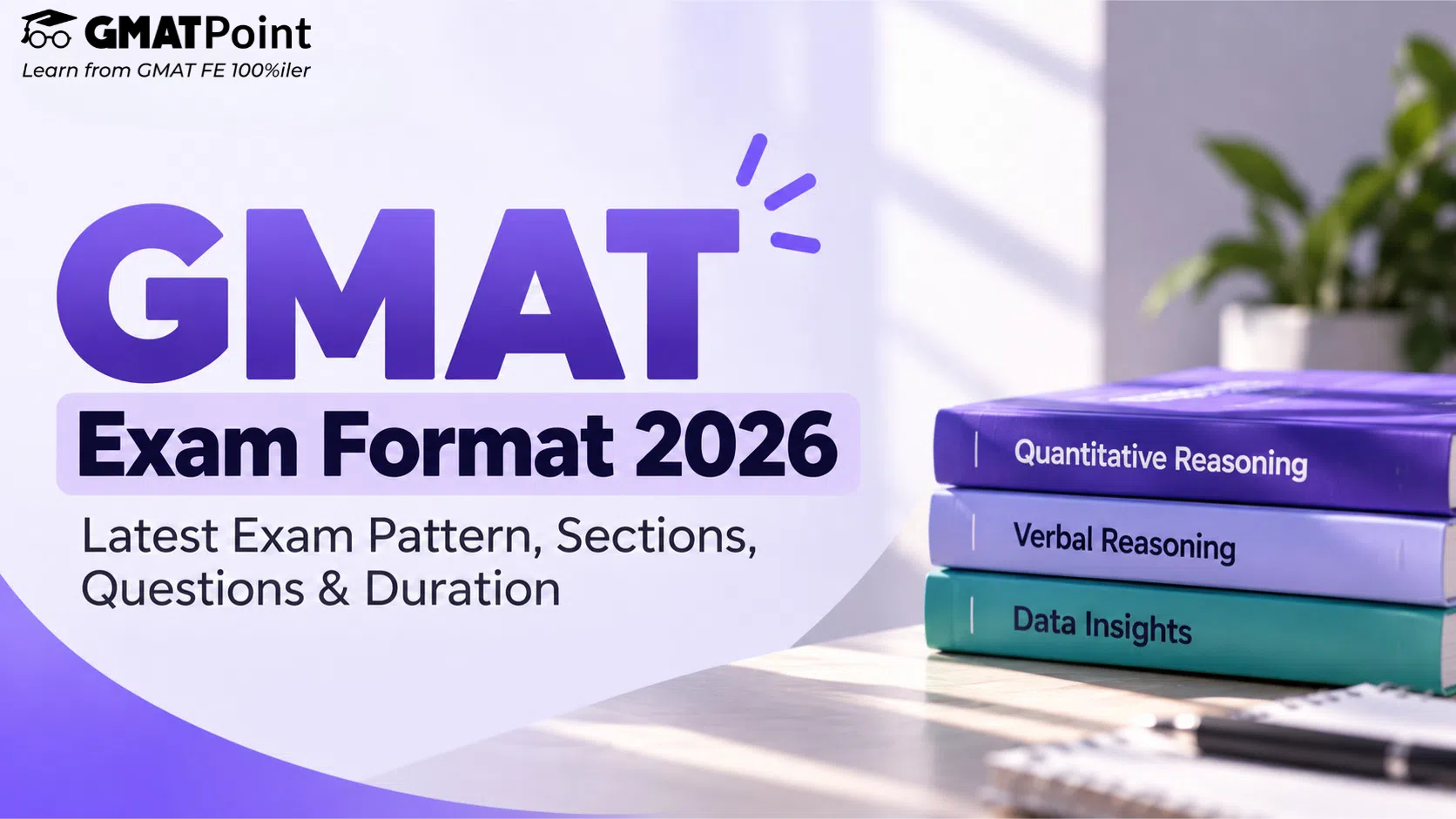
For over 50 years, the Graduate Management Admission Test (GMAT) has been the flagship global business school entrance examination. The GMAT is a very important test for aspirants looking forward to getting admitted into prestigious business schools all over the world. GMAT was conducted by the Graduate Management Admission Council (GMAC), and hence, it was one of the important milestones in the aspiring business leaders' careers. The GMAT exam consists of three important sections. They are quantitative reasoning, verbal reasoning, and data insights.
The Verbal Reasoning section of the GMAT is the most important section for candidates overall who are targeting top global business schools. The Verbal Reasoning section of the GMAT tests candidates' skills in interpreting and evaluating English passages. The GMAT Verbal Syllabus 2026 consists of 23 questions to be completed in 45 minutes, divided into reading comprehension and critical reasoning. The GMAT Verbal section essentially tests how well candidates can understand written text, analyse arguments, assumptions and inferences
This blog breaks down the complete GMAT Verbal syllabus for 2026 in detail.
How to Prepare for GMAT Verbal 2026
In the GMAT exam, the Verbal Reasoning section is structured to examine the aspirant's ability to read, understand and analyse the given passage. The verbal reasoning section of the GMAT exam has a total of 23 questions that aspirants have to answer within 45 minutes. This section comprises GMAT Reading Comprehension and GMAT Critical Reasoning. Here’s how to prepare for the Verbal Reasoning section of the GMAT
Reading Comprehension
Reading passages becomes easier when you try to understand the main idea instead of remembering every line. Some simple habits can help you read faster and answer correctly. Use these easy tips to stay focused and get better results.
Read for Structure, Not in Detail: Avoid memorising every fact in a passage; instead, focus your energy on understanding the structure of the passage and what function each paragraph serves. Identify the author's purpose and the central argument.
Use Transition Words as Signposts: Transition words such as however, therefore, for example, and nevertheless indicate crucial transitions in the argument. By paying attention to these cues, you'll be able to map the passage efficiently and effectively.
Visualise Complex Ideas: As you read technical or abstract material, mentally visualise relationships or key processes. Visualisation aids in retaining and organising complex information.
Don't Overread: Most questions don’t require you to understand the entire passage in depth. Use the question stem to guide you to relevant sections.
Critical Reasoning
Understanding arguments is easier when you know what the author wants to say and how they support it. With a few simple tricks, you can find the correct answer faster. Follow the tips below to stay clear and avoid mistakes.
Identifying the Argument Core: First, identify the conclusion, followed by the premises that lead to that conclusion. Having this basis will efficiently enable you to assess the argument more clearly.
Know the Question Type: Before diving into the answer choices, understand the task: are you strengthening? Weakening? Finding an assumption? Clarifying the question's goal will make the answer elimination process easier.
Pre-phrase the Answer: Try to anticipate what a correct answer might look like. It keeps you actively engaged and helps you avoid trap choices.
Beware of Common Trap Answers: Extreme words - always, never, must.
Out of context responses (off-topic from the debate) Restatements (options that repeat but don't analyse)
Read More: GMAT 2025 Expected Questions PDF With Detailed Solutions
GMAT Exam Pattern 2026: Verbal Reasoning
The GMAT Verbal Reasoning section tests how well you understand passages and arguments. The pattern is easy to follow, with a set number of questions and a fixed time. Below are the main details of the GMAT Verbal Reasoning Exam Pattern 2026 in a simple format.
Here is the detailed analysis of the GMAT Verbal Reasoning Exam Pattern 2026
Verbal reasoning section features | Details |
Total number of questions | 23 questions |
Total time Duration | 45 minutes |
Question type | Multiple choice questions (MCQ) |
Score scale | 60 -90 |
Adaptive format | Yes available |
Read More: GMAT Previous Year Question Papers, Section-Wise PDFs
GMAT 2026 Syllabus: Verbal Reasoning
In the GMAT exam, the Verbal Ability section has 23 multiple-choice questions. These questions are from reading comprehension and critical reasoning. Below is the GMAT verbal reasoning syllabus
Reading comprehension:
Reading Comprehension questions measure candidates' ability to understand words and statements, understand logical relationships between significant points, draw inferences, and follow the development of quantitative concepts. In this topic, questions have a 350-word passage followed by multiple-choice questions. Based on the main idea, supporting ideas, inferences, context, style, and tone.
Critical reasoning:
Critical Reasoning questions in the GMAT exam measure candidates' ability to make arguments, evaluate arguments, and formulate or evaluate a plan of action. Critical Reasoning questions in the GMAT verbal section are based on short passages (usually under 100 words), followed by choices. These questions assess how well a candidate can break down an argument, identify assumptions, and evaluate logic based on the information provided.
Read More: GMAT Syllabus 2025, Exam Pattern, Section-Wise Syllabus PDF
Important Topics for GMAT Verbal Reasoning
The GMAT Verbal Reasoning section syllabus includes reading comprehension and critical reasoning. Some of the important topics in the GMAT exam verbal reasoning section are discussed below
Critical Reasoning
Argument Analysis: The logic, form, and elements of an argument.
Assumption Identification: Identifying assumptions that are not stated, on which the argument counts as true.
Strengthen/weaken questions: Which of the following options best supports/undermines the argument?
Inference: A logical conclusion drawn from the information provided.
Evaluation/Paradox: Identifying what type of information would be most helpful in evaluating an argument or explaining an apparent paradox.
Roles of Boldfaced Portions: This will involve explaining the function of certain parts of a boldfaced argument.
Reading Comprehension
Main Idea: Identifying the central idea or purpose of a passage.
Inferred Ideas: Differentiating between what is directly stated and what can logically be inferred.
Supporting Ideas: Identifying the connections among various pieces of information within a reading.
Function: Knowing the purpose or significance of a certain sentence or phrase as found in the passage.
Application: Apply a concept or idea taken from the passage to a new situation.
Active Reading involves focusing on the topic, main arguments, and conclusion in the very first read without having to memorise each and every detail.
Preparation Tips for GMAT Verbal Reasoning
You can get better at verbal skills by reading often and practising regularly. A few easy tips can help you understand passages faster, avoid mistakes, and take a GMAT mock test to understand the question types. Follow the points below to improve your preparation in a simple and smart way.
Frequent Reading: To improve comprehension and speed, read books, articles, and newspapers. From formal academic texts to news reports, pay special attention to the various writing styles.
Sharpen Usage and Grammar Skills: Focus Edition no longer includes sentence correction, but your comprehension accuracy is still supported by grammatical awareness. Be mindful of meaning, structure, and clarity.
Critical thinking: Develop your ability to evaluate arguments by outlining their premises, conclusions, and presumptions. This improves one's capacity to evaluate logic and identify logical fallacies.
Practice makes perfect: It's crucial to practice frequently. Take practice exams to become acquainted with test formats, question types, and timing.
Examine and evaluate errors: Examine your errors and determine why your reasoning didn't work for each practice passage you complete.
Prioritise quality over quantity: By taking a few tests and carefully reviewing your errors. Taking more tests is not the best way to get better; understanding why you answered a question incorrectly is the best way.
Organise your time: Practise under timed conditions whenever you can to replicate an actual exam. Setting a time limit for each question or section can be beneficial.
Methods of elimination: Eliminating the blatantly wrong answers from multiple-choice questions will improve your chances of selecting the right answer.
Understand the test's format: Be mindful of the questions that will be asked and how they will be presented, as these may differ depending on the provider.
Read More: GMAT Preparation Strategy 2025, Section-wise Preparation Tips
GMAT Verbal Syllabus 2026: Conclusion
The GMAT Verbal Syllabus 2026 checks how well you understand ideas, read complex passages, and judge arguments. It has only two parts: Reading Comprehension and Critical Reasoning. This section tests your thinking skills, not your memory. A strong verbal score shows that you can understand information clearly and make logical decisions, which top business schools value.
Preparing for GMAT Verbal becomes easier when you read regularly, understand how arguments work, and practise with a timer. Try to focus on the main idea, key points, assumptions, and the flow of the passage. When you learn the exam pattern, revise important topics, and analyse your mistakes, you will slowly improve. With steady practice and a smart plan, you can score well on the GMAT Verbal 2026.





![GMAT Accepting Colleges in India 2026: MBA Programmes List [Free PDF]](https://gmatpoint.com/media/Colleges_accepting_GMAT_PDF_Banner.webp "GMAT Accepting Colleges in India 2026: MBA Programmes List [Free PDF]")