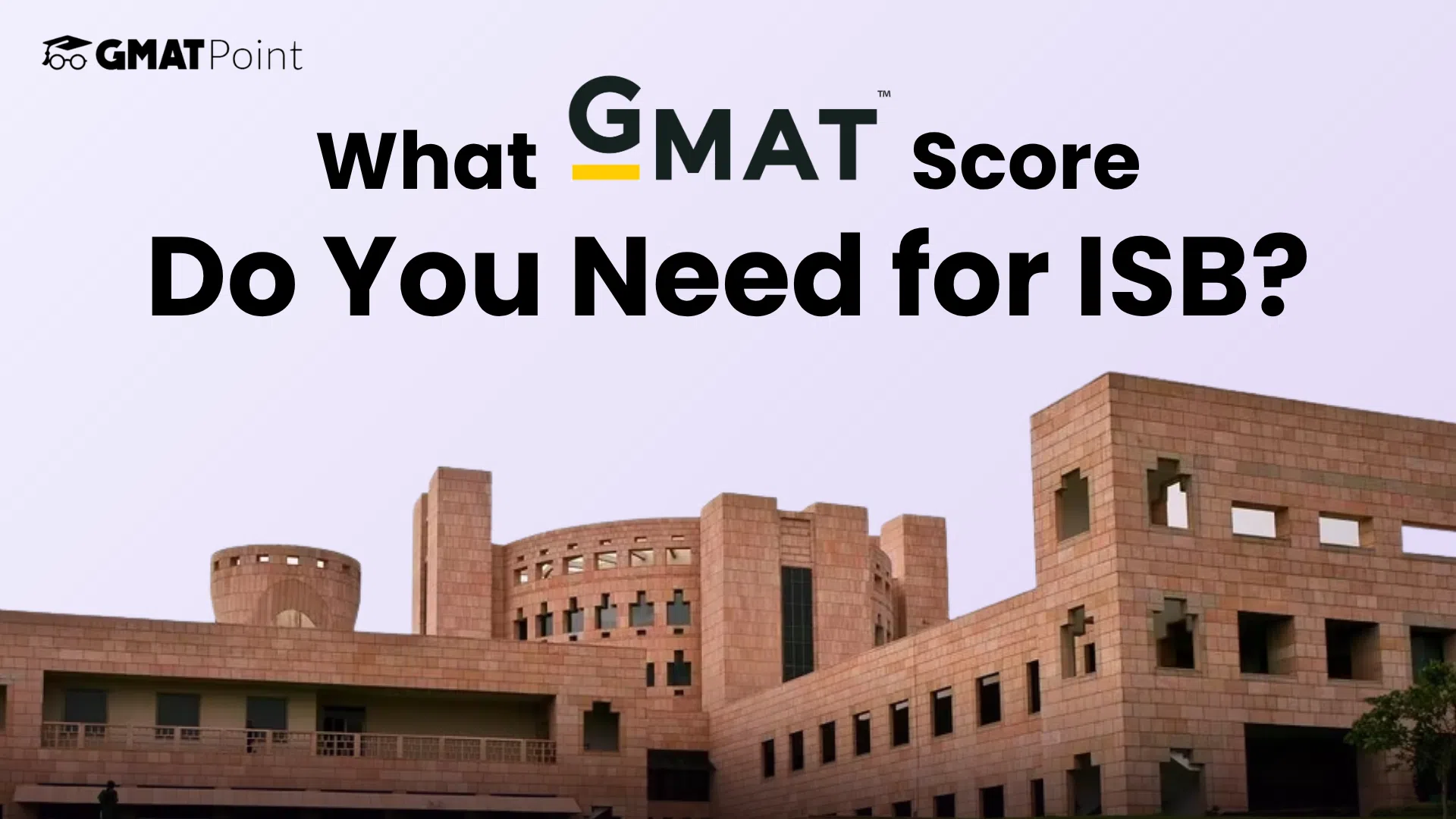

What GMAT Score Do You Need for ISB?
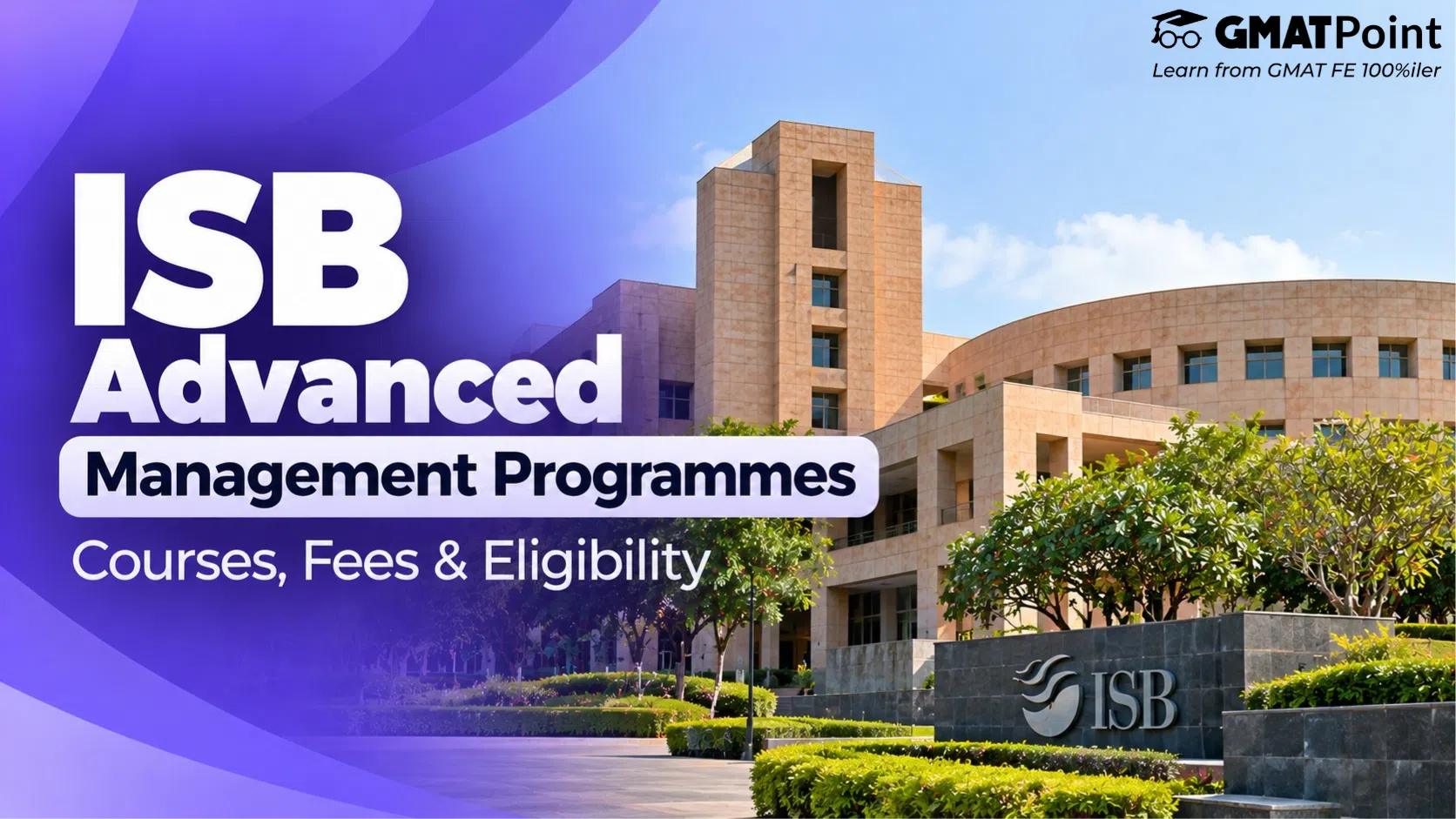
The Indian School of Business is one of India’s leading business schools and attracts a highly competitive applicant pool for its PGP and PGP YL programmes. Applicants frequently ask what GMAT score is required for admission to ISB. Although ISB does not publish a minimum GMAT score, recent class profiles provide useful benchmarks for prospective applicants. Both PGP and PGP YL state that there is no minimum GMAT score required to apply.
*Note: The scores discussed below are for the PGP, since the PGP YL was inaugurated in 2025. But official data suggests the scores are similar for both.
ISB GMAT Scores for the Last Five Years
Although ISB doesn't specify a minimum GMAT score requirement for applicants, recently admitted students' GMAT scores are still a great indicator to gauge the sort of scores one should aim for generally. The admitted cohort’s GMAT performance, on average, continues to be very good, indicating the high standard of ISB's admissions process. With the introduction of the GMAT Focus Edition in late 2023, ISB began receiving scores from both versions of the examination. Although the previous GMAT was discontinued in January 2024, its scores remain valid for five years from the test date. Therefore, some applicants can still submit valid scores from the previous edition, provided their scores are still valid.
Class of | Accepted GMAT Format(s) | Average GMAT Score | Score Range |
2027 | GMAT Focus & Classic | FE: 672 Classic: 720 | FE: 575-795 Classic: 640-780 |
2026 | GMAT Focus & Classic | FE: 669 Classic: 720* | FE: 555-765 Classic: Up to 780 |
2025 | GMAT Focus & Classic | FE: 675* Classic: 719 | Not publicly available |
2024 | GMAT Focus & Classic | FE: 665* Classic: 717 | Not publicly available |
2023 | Classic GMAT | Classic: 720 | Not publicly available |
*Estimates made using official placement reports and GMAC’s official tables.
What do score ranges reveal
Large GMAT score differences among the admitted students at ISB demonstrate the main feature of its admission policy—i.e., holistic application consideration. A combination of good interviews, essays and profile can outweigh a poor score. Similarly, a high score is not a guarantee for admission. The Class of 2027 reported GMAT Focus Edition scores from 575 to 795, which according to GMAC’s official concordance table, represents from the 58.7th percentile all the way to the 100th percentile.
The wide range of scores indicates that ISB uses a comprehensive approach to evaluate candidates. In spite of the fact that a higher GMAT score will make your application better, several other elements are considered together to reach the final decision, such as academic performance, quality work experience, leadership potential, career progression, work-life achievements, application essays and interview performance.
Therefore, it is possible for applicants with a slightly lower GMAT score to still be admitted if they have demonstrated outstanding strength in other areas.
For free GMAT study resources, check out: GMATPoint Free Resources
What do ISB batch profiles reveal
- ISB does not have a single cutoff score for its admission, as its admissions committee accepts candidates from a broad spectrum of test scores. For example, the Class of 2027 had GMAT Focus Edition scores varying from a low of 575 all the way up to the high of 795, which further shows that there isn't any particular score that is a requirement for getting accepted.
- Still, the competition is quite tough as the average GMAT score at ISB is one of the highest. A mean GMAT Focus Edition score of around 672 (720 on the Classic GMAT) indicates that most admitted students still possess extremely good scores.
- A lower-than-average GMAT score does not automatically rule you out. The broad score range suggests that candidates with lower scores can receive admission offers if they have an otherwise outstanding profile.
- ISB follows a holistic admissions process. The admissions committee evaluates multiple factors, including academic performance, quality of work experience, leadership potential, career progression, essays, recommendations, extracurricular achievements, and interview performance.
- A higher GMAT score will definitely make your application stand out, but it's not the only thing they consider. Applicants with GMAT scores equal to or greater than class average may get a slight edge, however, a great application overall may well make an impression regardless of a relatively lower GMAT score.
- The main message: Rather than trying to nail a perfect score on GMAT only, make an all-around strong application that depicts your work achievements, leadership experience, and the influence of your career.
Is Your GMAT Score Competitive for ISB?
It is difficult to identify a universally safe score because ISB does not publish an official GMAT cut-off. Nevertheless, recent class averages and GMAC’s official concordance data can be used as broad benchmarks.
675+ GMAT Focus / 730+ Classic GMAT: Excellent score. This places you around or above recent ISB class benchmarks and can make your application highly competitive when supported by a strong overall profile.
655-665 GMAT Focus / 710-720 Classic GMAT: Strong and competitive. Applicants in this range are close to recent ISB averages, although work experience, academic performance, leadership achievements, essays and interview performance remain important.
635-645 GMAT Focus / 690-700 Classic GMAT: Potentially competitive with an outstanding profile. Applicants may need strong career progression, leadership impact, academics and compelling application essays to compensate for being below recent class averages.
Below 635 GMAT Focus / below 690 Classic GMAT: Admission is still possible, but the application may become significantly more profile-dependent. Retaking the GMAT may be worth considering when sufficient preparation time is available.
Therefore, a GMAT Focus score of 675 is a strong initial target for ISB applicants.










![ISB Programmes Full Breakdown 2026: Compare PGP, PGP YL, Fees & Placements [Free PDF]](https://gmatpoint.com/media/ISB_PDF_Banner.webp "ISB Programmes Full Breakdown 2026: Compare PGP, PGP YL, Fees & Placements [Free PDF]")