

Choosing whether to take the GMAT can be confusing, especially when MBA programs have different admission requirements and testing policies. For many applicants, however, the GMAT remains a useful way to demonstrate academic readiness, widen business school options, and strengthen their overall MBA application.
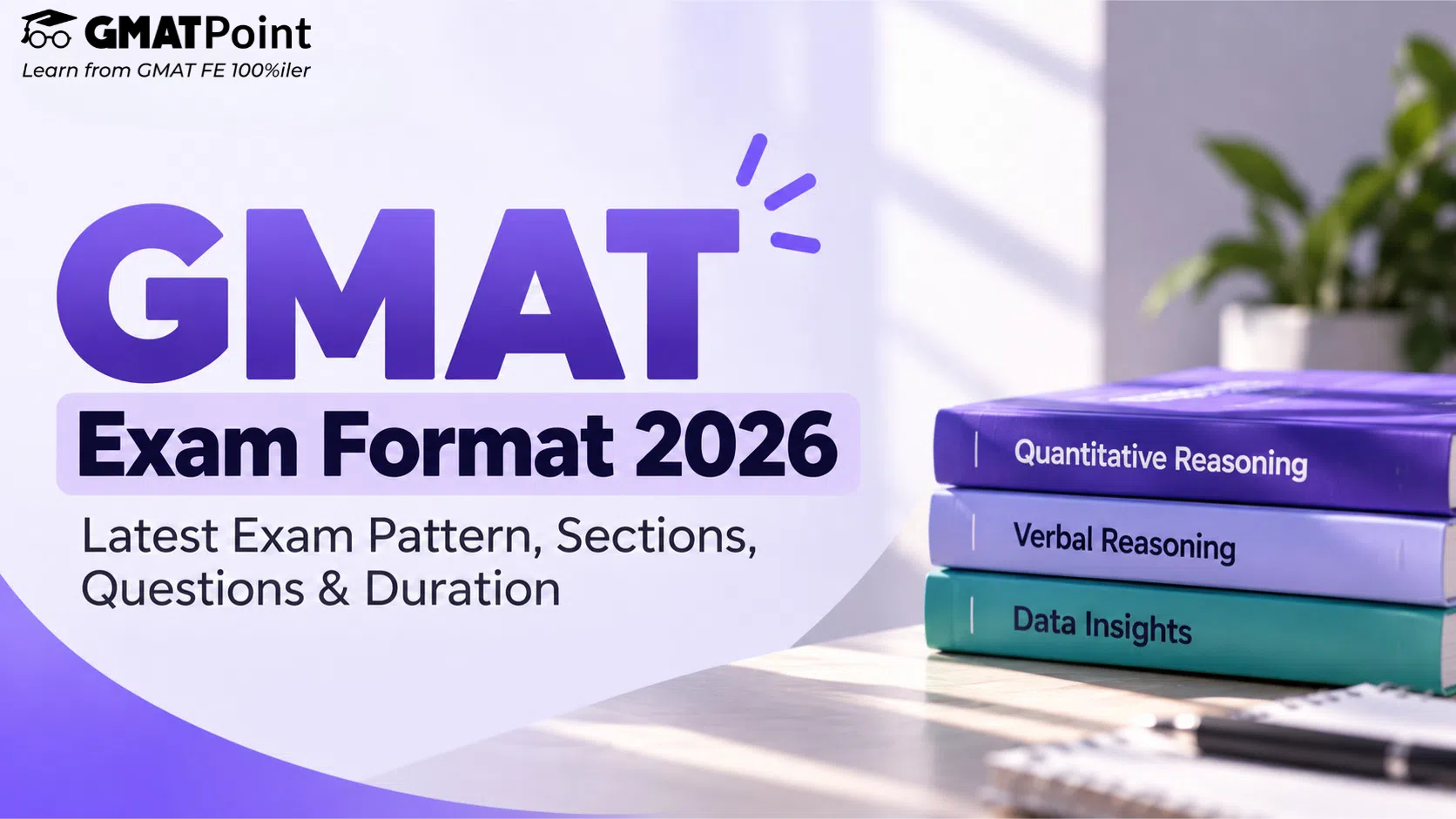
The current GMAT is 2 hours and 15 minutes long, excluding an optional 10-minute break, and consists of three equally weighted sections: Quantitative Reasoning, Verbal Reasoning, and Data Insights. The total score ranges from 205 to 805, and GMAT scores remain valid for five years.
For the right applicant, the GMAT can be more than an admissions requirement. A competitive score can provide business schools with additional evidence of your reasoning, problem-solving, and data analysis abilities. To check your current score level, try taking GMAT Sample Tests.
Why Should You Take the GMAT?
One of the biggest benefits of the GMAT is that it gives business schools a standardized measure for evaluating applicants from different academic, professional, and geographic backgrounds. In fact, a lot of schools require you to submit a GMAT score along with your application as a mandatory requirement.
This can be particularly useful if your undergraduate institution is not widely known internationally, your degree has limited quantitative coursework, or your academic record does not fully reflect your current abilities. A strong GMAT performance does not erase weaknesses elsewhere in your profile, but it can provide additional evidence of your academic readiness.
GMAT Benefit | How It Helps MBA Applicants |
Strong GMAT score | Provides additional evidence of academic readiness |
Standardized assessment | Helps schools evaluate applicants across different backgrounds |
Scholarship potential | May support consideration for merit-based funding |
Wider school options | Keeps more GMAT-accepting programs within your shortlist |
The GMAT tests skills such as critical reasoning, problem-solving, reading comprehension, quantitative reasoning, and data literacy—abilities that are relevant to graduate management education. GMAC states that GMAT scores are used by thousands of graduate business programs worldwide, making the exam particularly useful for applicants building an MBA or business master's shortlist across countries.
If your preparation needs more structure,GMATPoint Courses can help you practise under timed exam conditions.
Read More: GMATPoint Courses: What's included?
How Does the GMAT Strengthen Your MBA Application?
An MBA application is evaluated across several parameters, including academics, work experience, essays, recommendations, interviews, and standardized test scores. The GMAT is another measurable academic component to this profile.
A competitive score may be especially useful when you want to demonstrate:
- Quantitative readiness despite limited mathematics coursework in college.
- Analytical ability through timed problem-solving and data-based questions.
- Current academic capability if your undergraduate grades were average.
- Critical reasoning skills relevant to graduate-level management study.
- Readiness for rigorous business school coursework.
Importantly, a high GMAT score does not guarantee admission. It cannot replace strong work experience, essays, recommendations, academic performance, or interview preparation. Instead, think of it as another piece of evidence available to an admissions committee.
There is also no universal "good GMAT score" that works for every applicant. Competitive score levels differ considerably by school and program, so checking the recent class profile and testing policy of each target business school is more useful than chasing a single number.
The best way to increase your GMAT score is to do so under the guidance of proven top-scorers and GMAT Experts.
Read More: GMAT Expert Mentorship
Can a High GMAT Score Improve Scholarship Chances?
A competitive GMAT score can also be useful when applying for merit-based scholarships.
Business schools may consider factors such as academic performance, leadership, professional achievements, work experience, essays, interviews, diversity of experience, and standardized test performance on top of your GMAT score when awarding funding, but a strong score can increase your chances.
Profile Situation | Possible GMAT Advantage |
Strong academics and experience | Adds another strong academic indicator |
Average undergraduate GPA | Provides evidence of current academic ability |
Limited quantitative coursework | Demonstrates measurable quantitative readiness |
Competitive scholarship pool | Adds another comparable achievement |
Strong professional background | Complements career achievements with academic evidence |
Some business schools use GMAT performance as one factor when considering applicants for merit-based scholarships. Therefore, a strong score may improve your scholarship profile, but it should not be treated as a guarantee of financial aid.
How Can the GMAT Help You Stand Out in MBA Admissions?
Top MBA programs often receive applications from candidates who already have strong academic records and professional experience. In such a competitive applicant pool, a good GMAT score can become one more point of differentiation.
The exam can demonstrate abilities such as:
- Quantitative reasoning: Working with arithmetic and algebra-based problems.
- Critical reasoning: Evaluating arguments and identifying logical relationships.
- Data analysis: Interpreting information presented across different formats.
- Reading comprehension: Understanding and evaluating complex written material.
- Decision-making under time pressure: Solving questions accurately within strict time limits.
Imagine two applicants with broadly similar academics, experience, essays, and recommendations. If standardized testing forms part of a school's evaluation, a stronger GMAT performance could provide additional evidence in favour of one of the applicants. But, that does not mean admissions committees simply choose the candidate with the higher GMAT score. MBA admissions remain holistic, and the importance placed on testing varies by program.
What Is the GMAT Superscore in 2026?
One major change in 2026 is the introduction of the GMAT Superscore. GMAC announced the feature in June 2026, and GMAT Superscore officially launched on August 12, 2026. It automatically combines a candidate's highest eligible Quantitative Reasoning, Verbal Reasoning, and Data Insights section scores across valid attempts of the latest GMAT edition.
The Superscore does not replace your original GMAT attempts. Instead, it appears as an additional score data point alongside the single-attempt score sent to a business school.
This can make retesting more attractive for applicants who perform strongly in different sections across separate attempts. However, each business school has discretion over how much weight, if any, it gives the GMAT Superscore during admissions.
Therefore, candidates should still aim for their strongest possible performance in every section on each attempt rather than relying entirely on superscoring.
Should You Take the GMAT in 2026?
Taking the GMAT makes sense when the exam supports your target schools, application profile, and scholarship strategy.
Consider the GMAT if you... | How It Could Help |
Target competitive MBA programs | Provides another academic performance indicator |
Want stronger academic evidence | Demonstrates current reasoning and data skills |
Want wider school choices | Keeps GMAT-accepting programs available |
Target merit scholarships | May strengthen the academic side of funding reviews |
Have limited quantitative coursework | Provides measurable evidence of quantitative ability |
Can prepare for a competitive score | Makes the time and financial investment worthwhile |
Before registering, check the current testing policy of every target program. Some schools require standardized tests, some offer waivers or test-optional admissions, and policies can vary even within the same university.
Test-optional does not necessarily mean that submitting a strong score has no value. At the same time, there is little benefit in taking the GMAT without first checking how your target schools use it.
For structured preparation, GMATPoint Courses (Designed by Sayali Kale - 785 GMAT FE scorer) can complement a planned GMAT study schedule.
Conclusion
The GMAT can be valuable for MBA aspirants who want to demonstrate academic readiness, expand their business school options, or strengthen their profile for competitive admissions and merit-based scholarships.