
What to Carry to the GMAT Test Centre? Check Now!
Preparing for the GMAT is about more than mastering Quantitative Reasoning, Verbal Reasoning and Data Insights. Along with a strong preparation strategy using GMAT Courses and GMAT Mocks, it's equally important to be ready for test day.
Forgetting an important document or carrying a prohibited item can delay your check-in or even prevent you from taking the exam. This guide explains everything you need to know about the GMAT test centre checklist, including ID requirements, permitted and prohibited items, reporting time and the check-in process.
GMAT ID Requirements: What Identification Should You Carry?
A valid identification document is mandatory for taking the GMAT at a test centre. Your ID must be:
- Original (not a photocopy)
- Valid and unexpired
- Issued by a government authority
- Legible and in good physical condition
The name and date of birth on your ID must match the details in your mba.com account. If there is a mismatch, you may not be allowed to take the exam.
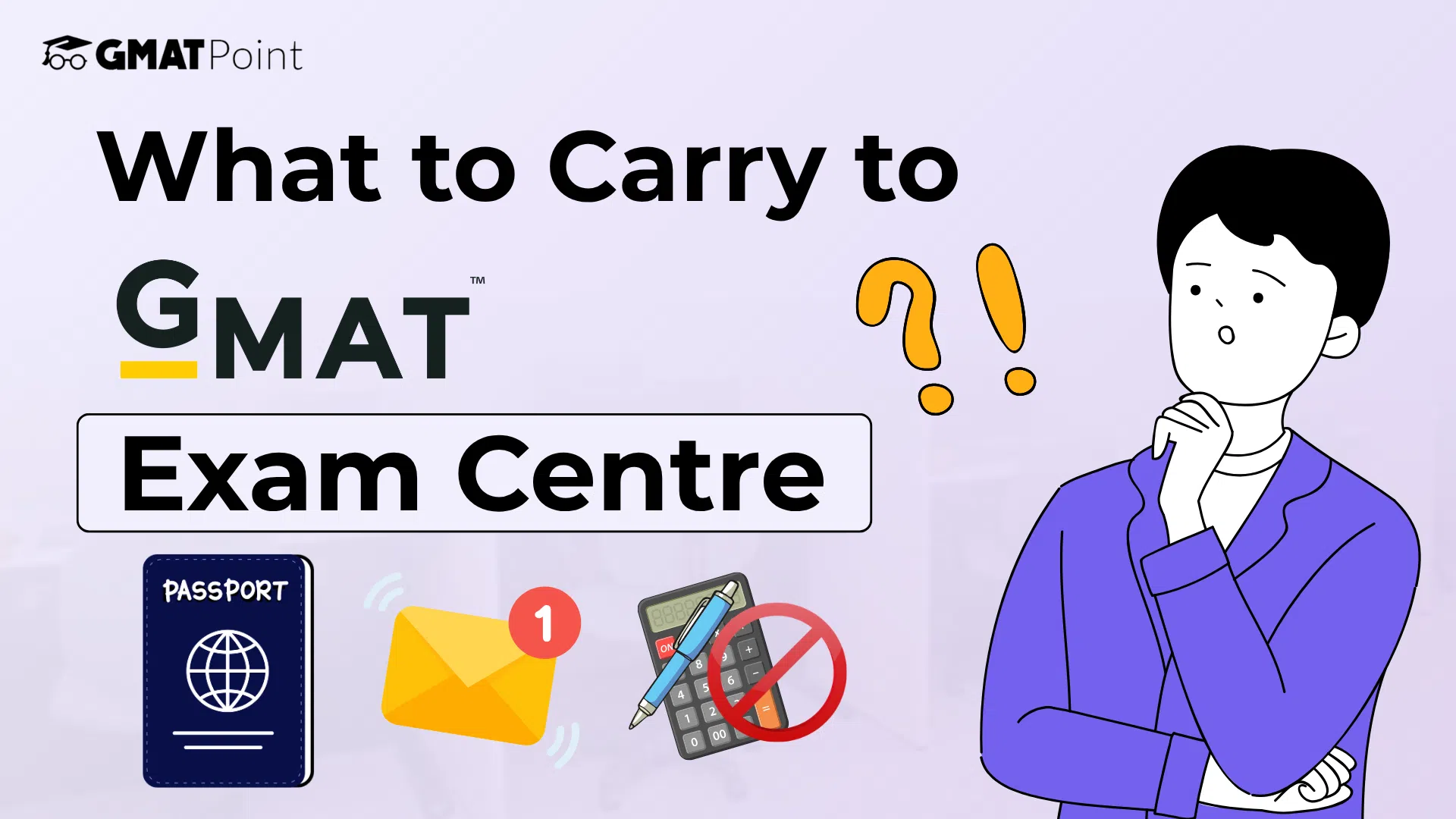
For candidates testing in India, an original valid passport is required.Other documents such as Aadhaar, PAN card, Voter ID and Driving Licence are not accepted as substitutes.
Before your exam, make sure your passport:
- Is valid and unexpired
- Is in good physical condition
- Contains a recognisable photograph
- Matches your registration details exactly
Checking these details a few days before your appointment can help you avoid unnecessary problems on test day.
Read More:GMAT Registration 2026: Documents, Fees and Application Process
What Can You Bring to the GMAT Test Centre?
Candidates may bring personal belongings to the GMAT test centre, but only approved items are allowed inside the testing room. All other belongings must be stored in the locker or designated storage area provided by the test centre.
Generally, you may bring:
- Your original identification document
- Pearson VUE appointment confirmation email (optional)
- Prescription eyeglasses (without the case)
- A light sweater or light non-outerwear jacket
- Approved comfort aids or medical devices, where applicable
The locker key provided by the test centre may also be taken into the testing room if required.
The test centre provides all note-taking materials required for the exam. Candidates receive a note-taking booklet and marker for rough work and must return them before leaving the testing room.
You cannot bring your own:
- Pens or pencils
- Paper or notebooks
- Personal scratch paper
- Markers or erasers
If you require additional note-taking sheets during the exam, simply raise your hand and inform the test administrator.
Read More:GMAT Exam Pattern 2026
What Is Not Allowed Inside the GMAT Testing Room?
Although you may bring personal belongings to the test centre, many items cannot be taken inside the testing room.
These include:
- Mobile phones
- Smartwatches and fitness trackers
- Personal watches
- Calculators and calculator-enabled devices
- Books and study material
- Notes and loose papers
- Personal writing materials
- Headphones or earbuds
- Cameras or recording devices
- Bags, wallets, purses and backpacks
- Food, water and chewing gum
- Tobacco products
- Weapons or unsafe objects
These items must remain in your locker or designated storage area throughout the exam.
Candidates should also remember that an on-screen calculator is available only during the Data Insights section. Personal calculators are not permitted inside the testing room under any circumstances.
Possession or use of unauthorised materials during the exam may result in dismissal under GMAT testing policies.
Can You Carry Food and Water to the GMAT Test Centre?
Food and water cannot be taken inside the GMAT testing room. However, candidates may be allowed to bring them to the test centre and store them in the locker or another designated area, depending on the centre’s instructions.
At some test centres, water bottles may need to be stored separately from bags and other belongings. Candidates should follow the directions given by the test-centre staff.
Food and water may generally be accessed only during the optional break. During the break, candidates may access:
- Water
- Food
- Approved comfort items, subject to inspection
Candidates should not access mobile phones, study material, watches or other restricted electronic devices during the break.
The exact storage arrangement may vary between centres, so it is best to confirm the procedure with the test administrator during check-in.
GMAT Reporting Time and Check-In Process
Candidates should plan to arrive at the GMAT test centre at least 30 minutes before their scheduled appointment.
Reaching early allows enough time to complete identity verification, security checks and other check-in procedures. Arriving late may prevent you from completing the required formalities or being admitted to the exam.
The GMAT check-in process may include the following steps:
- Identification verification
Present the original identification document required for your testing location. For candidates testing in India, this means an original valid passport. - Storage of personal belongings
Store your bag, wallet, phone, watch, water, food and other belongings according to the instructions provided by the test-centre staff. - Digital photograph
A digital photograph may be taken as part of the identity verification process. - Digital signature
You may be asked to provide a digital signature and agree to the GMAT Test Taker Rules and Agreement. - Palm-vein scan
A palm-vein scan may be conducted where permitted by law. - Inspection of approved items
Prescription eyeglasses, clothing, comfort aids and other approved items may be inspected. - Note-taking materials
The test centre will provide a note-taking booklet and marker for use during the exam. - Entry into the testing room
Once the check-in process is complete, you will be directed to your assigned workstation.
Follow all instructions given by the test administrator throughout the exam and during the optional break.
Read More: GMAT Exam Day Guidelines and Test-Taking Strategy
GMAT Test Centre Checklist
Use this quick checklist before leaving for your GMAT appointment:
- Carry your original, valid and unexpired passport if testing in India.
- Confirm that your name and date of birth match your mba.com account.
- Recheck your appointment date, time and test-centre address.
- Plan to arrive at least 30 minutes early.
- Carry the Pearson VUE appointment confirmation email if you want to.
- Carry prescription eyeglasses without the case if required.
- Carry a light sweater or light non-outerwear jacket if needed.
- Bring only approved comfort aids or medical devices.
Completing this checklist before the exam can help you avoid unnecessary delays and make the check-in process smoother.
Final Tips for the GMAT Test Day
Knowing what to carry to the GMAT test centre is only one part of being fully prepared. You should also be familiar with the exam format, section timing and pressure of completing a full-length mock test. Mock tests can help you improve pacing, identify weaker areas and become more comfortable with Quantitative Reasoning, Verbal Reasoning and Data Insights.
Candidates who still need structured preparation can explore GMATPoint Courses for concept lessons, guided practice and full-length test preparation.