
GMAT Subjects
GMAT covers Arithmetic, Algebra and Number System topics in the Quant subjects list. Each subject of the QA section of GMAT has further subtopics. For instance, in the Arithmetic subject, you must study percentage and its application, which includes simple interest, compound interest, profit and loss and mixtures (removal/replacement). Different sections of the GMAT exam have a list of subjects to study for 2026, like time, speed, and distance in QA, or modifiers in VA, and such.
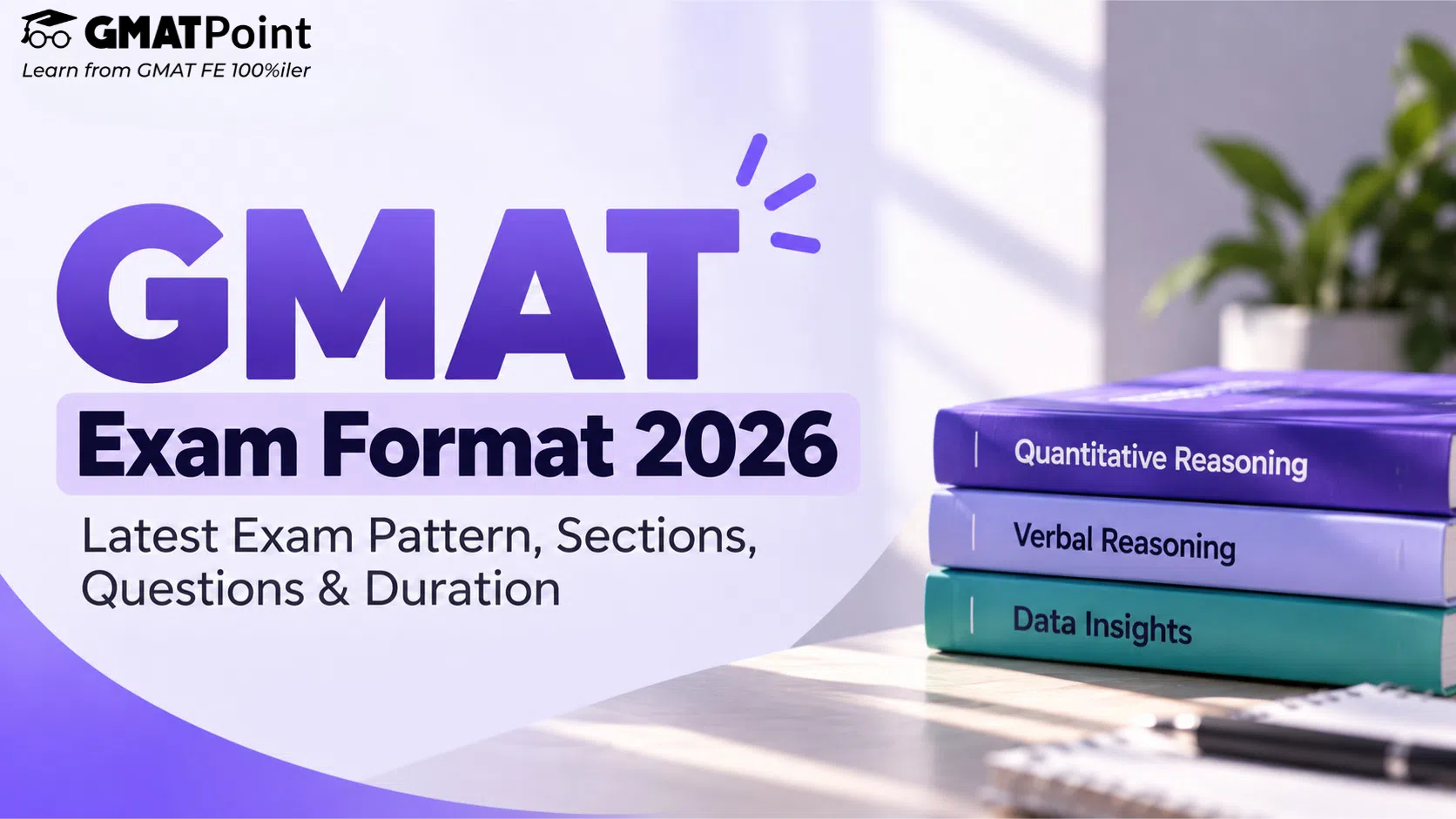
You will have to answer a total of 64 questions covering various topics from the GMAT subject list 2026. The total exam duration is 2 hours and 15 minutes, which equals around 135 minutes, and a 10-minute break. With only 45 minutes to complete each section of theGMAT exam, it is important to have a clear understanding of the exam format, GMAT subject list 2026, number of subjects in the GMAT exam and overall exam pattern.
How Many Subjects in GMAT Exam 2026?
GMAT exam has 3 sections and around 20 to 23 questions per section. The syllabus for the GMAT exam comprises around 12-15 topics in the QA and VA sections. THE GMAT DI component has around 6-7 subjects that test your data analysis and reasoning skills. Mostly, students find the DI section of the GMAT exam difficult. Depending on your strengths and weaknesses, you must design a solidGMAT preparation strategy to cover all the important subjects in each section of the test.
Subjects in the GMAT Quant Section
The arithmetic chapter in the GMAT Quant segment has subjects on percentages and its applications. The percentages chapter is crucial and it includes subtopics. Ratio and its application is another important subject of GMAT Quant. It comprises sub-chapters such as proportionality, Date, time and speed, time and work, etc.
- Algebra is the main subject in Quant, covering subjects like Equations, Inequalities, and Functions. These topics mainly focus on linear, quadratic, cubic equations, modulus and domain functions. GMAT Algebra subject also comprises the Coordinate Geometry chapter.
- The number system is a parent subject in the QA section of GMAT. It includes subjects in its syllabus such as number theory and modern math. The Number Theory and Modern Math subjects further include sub-topics like factors, LCM-HCF, remainder, averages, statistics, sets, permutations and combinations, and probability, among others.
Subjects in GMAT Verbal Section
The Verbal Reasoning section of the GMAT Focus Edition is divided into two parts. The verbal part includes both generic and specific questions. The subjects in the GMAT Verbal section are mentioned below.
Reading Comprehension Subjects
- Generic subjects include topics related to the identification of the main purpose or structure of a sentence or paragraph.
- Specific questions relate to chapters which cover a line or a word with an objective to correct, revise or reframe a line or substitute a word for a better word, etc.
Critical Reasoning Subjects
- Subjects in the CR section of GMAT compose topics on Reasoning and Data.
- To properly study this subject, you must cover subjects like strengthening a paragraph or a point, weakening strong sentences, making assumptions or finding flaws.
- Data-based subjects are related to chapters like Inferences and Conclusions from a given set of data.
Subjects in GMAT Data Section
This section is considered difficult as you need to interpret, analyze and solve data sets including tables, graphs, charts, etc. Around 2 MCQ-type questions will be asked from 1 data set. If 1 answer is correct and the other is incorrect, you will not get any marks for that question. All answers to a given GMAT DI section question must be correct to secure full marks for that answer.
- Table Analysis: Subject Analyse data in a table (spreadsheet with pre-defined filters).
- Graphics Interpretation subject: Recognise data relationships from a given graph. Graphs can be Scatter Plot, X/Y Graph, Bar, Pie or Statistical Curve Distribution Graph, etc.
- Multiple Source Reasoning: Analyse and interpret data from different sources such as texts, graphics and tables.
- Two-Part Analysis: Solve equations related to DI simultaneously while identifying data relationships. This subject tests either quant skills, verbal skills or both.
- Data Sufficiency: It was previously part of Quant and tested quantitative skills. Solve questions by identifying which statement is sufficient to prove a given equation.
Read More: GMAT Syllabus 2026, Exam Pattern, Section-Wise Syllabus PDF
GMAT Exam Pattern 2026
If you add up the score range in each section of the GMAT Focus Edition, you will arrive at the total or overall score range. The overall score range for GMAT is between 205 to 805 marks. Students must score between 80 to 84 marks in each section to get a total score of around 645 marks.
Name of GMAT Focus Sections | Total Number of Questions Per Section | Time Allotted Per Section in minutes | Section-wise Score Range |
Quantitative Reasoning | 21 | 45 | 60-90 |
Data Insights | 20 | 45 | 60-90 |
Verbal Reasoning | 23 | 45 | 60-90 |
Read More: GMAT Exam Structure 2026, Section-Wise Marking Scheme
GMAT Subjects 2026:Quantitative Reasoning
It is important to know the overall subjects covered in the GMAT subject list for 2026. Check the table below for more insights.
Quantitative Reasoning Topics for GMAT 2026 | ||
Speed, Time and Distance | Profit and Loss | Percentage |
Ratio and Proportion | Average | Partnership |
Algebra | Co-Geometry | Trigonometry |
Mensuration | Time & Work | Decimals |
Fractions | Probability | Arithmetic Problems |
Read More: GMAT Quant Syllabus 2026, Important Topics, Preparation Tips
GMAT Subjects 2026:Data Insights
GMAT DI subject includes moderate to difficult subjects in its overall syllabus. The umbrella topics that are important in the GMAT subjects 2026.Data Insights segment are mentioned below.
Data Insights Topics for GMAT 2026 | |
Data Sufficiency | Data Interpretation |
Graphic Interpretation | Table Analysis |
Two-Part Analysis | Multi-Source Reasoning |
GMAT Subjects 2026:Verbal Reasoning
Main chapters included in the GMAT Verbal Reasoning sections are highlighted in the table under. VA is an easy section, as reported by the students and may be attempted first or second, but it is not recommended to attempt this section at the end.
Verbal Reasoning Topics for GMAT 2026 | |
Reading Comprehension | Critical Reasoning |
|
|
Read More: GMAT Verbal Syllabus 2026, Important Topics, Preparation Tips
GMAT Subjects: Conclusion
The GMAT 2026 exam has three main sections: Quantitative Reasoning, Verbal Reasoning, and Data Insights. Each section tests different skills, such as math reasoning, reading skills, and data analysis. The Quantitative Reasoning section focuses on topics like arithmetic, algebra, and number systems, while the Verbal Reasoning section checks your ability to understand and analyze written content. The Data Insights section, which many find the hardest, tests how well you can interpret data from graphs and tables. To do well in these sections, it’s important to follow a clear study plan and practice regularly to get comfortable with each topic.
To do well in GMAT 2026, make sure you understand key topics like Probability, Algebra, Critical Reasoning, and Data Interpretation. Having a strong foundation in these areas and practicing with real exam questions will help improve your score. Identify your weak areas and work on them, while also using your strengths to your advantage. With the right study plan and consistent effort, you can succeed in the GMAT 2026 exam.